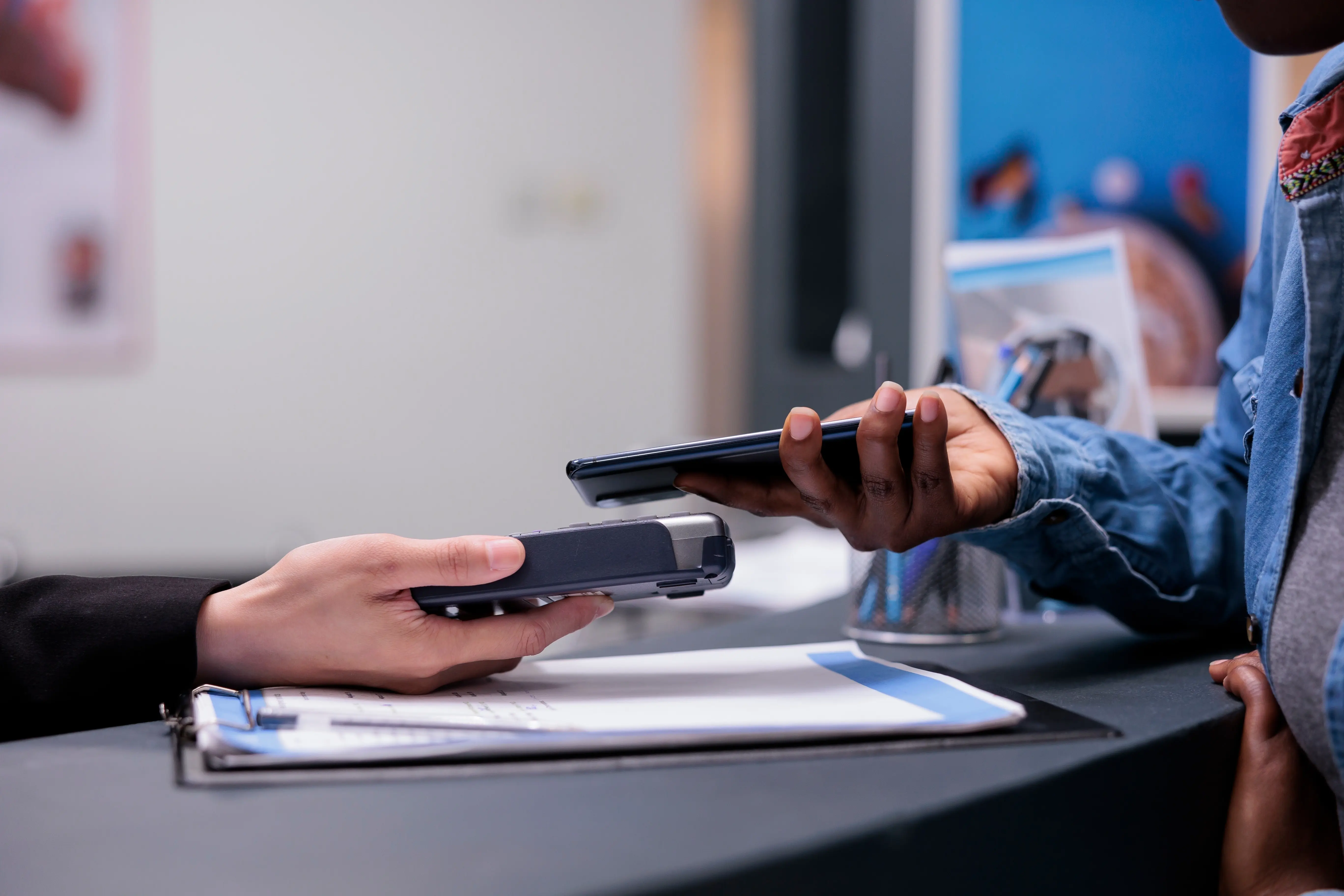
Cross-Border Payments

The rapid expansion of imports and exports, enhanced cash flow and greater transaction visibility have increased the volume of B2B payments around the world. Manufacturing supply chains have expanded significantly to transcend borders and empower businesses worldwide. Because of this, cross-border payments are becoming more central to international commerce, with asset management firms considering new jurisdictions while injecting new life into the global economy.

Endava pattern on swirling red white and blue dots

What are cross-border payments?

Cross-border payments are financial transactions where the payer and recipient are based in separate countries. They involve the transfer of funds or assets from one country to another, typically through banks or other financial institutions. Individuals or businesses can initiate these transactions, which often involve currency conversions and can be made using various payment methods. 

Cross-border payments examples

Here are some of the most common cross-border payment examples. 


Wholesale cross-border payments 


Transactions between financial institutions, such as banks, are for lending, borrowing and foreign exchange. 


Retail cross-border payments 


Transactions between individuals and businesses include online purchases, bank transfers and card payments. 


B2B cross-border payments 


Payments between businesses for goods and services. For example, a UK company buying raw materials from a German supplier. 


B2C cross-border payments 


Payments from businesses to consumers, such as e-commerce purchases. 


C2C cross-border payments 


Payments between individuals, such as remittances sent by migrant workers to their families. 


C2B cross-border payments 


Consumer payments to businesses, such as online shopping and bill payments. 

Cross-border payment methods

There are several different methods for cross-border payments:  


  • Wire transfers: A wire transfer is an electronic transfer of funds between two different banks or financial institutions. This payment type is commonly used for large transactions – amount limits vary based on location and network – and can be sent in different currencies. 


  • Credit card transactions: Credit cards are widely accepted worldwide, and businesses can accept customer payments in different currencies. Credit card transactions may be subject to currency conversion fees and other charges. 


  • Electronic funds transfers (EFTs): EFTs are electronic bank transfers, e-checks or electronic payments. They allow individuals and businesses to quickly and securely send and receive money electronically, and they are typically faster and more convenient than other forms of cross-border payments. 


  • International money orders: International money orders are a paper-based payment method that can be sent through the mail or transmitted electronically using a third-party provider. They can be purchased at banks and other financial institutions and are typically used for smaller transaction amounts. 


  • Online payment platforms: Online platforms allow individuals and businesses to send and receive money internationally using their mobile devices or computers. They often offer competitive exchange rates and low fees. Many credit card networks also offer online cross-border payments. 


  • Cryptocurrencies: Cryptocurrencies such as Bitcoin and Ethereum are decentralised digital currencies that can be used to make cross-border payments. These payments can be processed quickly and securely, but crypto has some drawbacks due to volatility in the cryptocurrency market. 

The Massive B2B Payments Opportunity

Read the e-book

How cross-border payments work

Currencies are closed-loop systems. Domestic payment systems are not traditionally connected with the systems of other countries, so when making a transfer, the currency isn't physically transferred overseas. Instead, international banks provide accounts for foreign counterparts and their accounts with their foreign counterparts, which enable banks to make payments in foreign currency.  


These funds are not sent across borders but credited in one jurisdiction and debited the corresponding amount in the other.  


For example, Bank A will send a message to Bank B instructing them to pay a customer. Bank B will then credit the end customer’s account with money from the account Bank A holds at Bank B. 


If the bank doesn't have a direct relationship, it must transact via an intermediary, a 'correspondent' bank. This bank provides accounts for Bank A and Bank B if they don't have a direct relationship.  


However, depending on the currencies or countries involved, a single partner may only sometimes be possible. If this is the case, Bank A will link with one correspondent bank, which will then link to another that can fulfil the transaction with Bank B. These chains of intermediaries are why, historically, cross-border payments took longer than expected. 

Cross-border payment modernisation

Cross-border payments lag domestic ones in terms of cost, speed, access and transparency. It is typically more challenging to make a payment from one country to another than to make a similar payment within the same country. In some cases, a cross-border payment can take several days and cost up to 10 times more than a domestic payment.


Many countries already have real-time payments (RTP) systems, where the main local banks are directly connected to an automated settlement system managed by the country’s central bank. These allow domestic payments to be processed around the clock and completed instantly. 


However, globalised business communities and the digital platforms that underpin them are accelerating the need to modernise processes and infrastructure.  


Embedded finance 


Embedded finance is soaring as businesses are realising the value of real-time access to financial data. This data can increase efficiency and automation, helping organisations combat rising operational costs and meet new customer expectations. It also lets businesses drill deeper into market trends and consumer behaviour, helping them serve customers better with targeted solutions that proactively meet their needs whilst opening new revenue streams. 


Embedded services integrate banking, lending and insurance into traditionally non-financial experiences, interactions and platforms. This helps businesses diversify their revenue and remove payment friction, creating a more attractive customer experience. It also lets B2B operators offer business loans and credit, accessible in a few convenient clicks. 


Payments harmonisation 


Payments harmonisation will also affect the way payments are made across borders. The most notable change is ISO 20022, with migration deadlines repeatedly delayed in many regions due to a lack of industry alignment and other bureaucratic roadblocks, but a hard deadline of November 2025 is now in sight.  


More than 70 countries have adopted the messaging standard in their systems, including Switzerland, China, India, Japan, and the US Clearing House Interbank Payments System (CHIPS). The migrations of Single Euro Payments Area (SEPA) payment schemes to ISO 20022 are also underway, and the UK plans to migrate to its New Payments Architecture (NPA) in 2025.  


When met, ISO 20022 will provide the standardisation to make moving money between financial institutions domestically and internationally easier. The improved data quality, richness and analytics required for compliance will enable a more efficient and resilient payment experience end-to-end throughout the customer journey. With more actionable insights to work with, institutions get the added benefit of better understanding their customers to meet their needs with AI and other proactive approaches. 


Cross-border payments are the backbone of international commerce, enabling businesses to tap into global markets and streamline operations across borders. As financial technologies evolve, so do the opportunities to make these transactions faster, more secure and more cost-effective. By adopting global payment solutions and staying updated on regulatory compliance, businesses can eliminate common hurdles, enhance customer satisfaction and gain a competitive edge in today's interconnected global economy. 

Further reading

Check out these resources to learn more about cross-border payments and its role in people-centric innovation.

Professionals discussing digital marketplace strategy with a focus on seamless and scalable payment solutions.

Payments for Marketplaces – How to Be(come) Successful

Read this blog to learn how new vendors provide businesses with turnkey solutions for payments in and out, onboarding, AML, KYC, tax and more.

Read the article
Skyscrapers

Payments Success Comes Down to Proactiveness

Read this blog to learn how organisations can find payment success and how well they can identify and address industry and customer trends.

Read the article
Pattern Mono Dark

IFX Payments: Utilising Financial Services in B2B Cross-Border Payments

Listen to this podcast to learn how fintechs are positioning themselves as partners with their B2B customers to help them gain a competitive advantage in cash flow.

Listen to the podcast
Payments-processing-healthtech_main

How Healthtech Simplifies and Secures Payments Processing

Digital payments have changed how consumers handle transactions; healthcare is no exception. Read this blog to learn more about how healthtech simplifies and secures customer payment processing.

Read the article
sales-consultation-couple-carousel-insight-expanded

The Massive B2B Payments Opportunity

Digitalisation and automation are fuelling the growth in the global B2B payments market. Download this e-book to learn what’s next for the modernisation of B2B payments.

Read the e-book
Discover more insights