
In knowledge-driven industries, the challenge isn’t producing expertise – it’s delivering it fast, accurately and at scale. Modern AI, built on cloud platforms like Microsoft Azure, is redefining how organisations generate, validate and govern content across education, healthcare and publishing ecosystems.
Where content is both product and proof of value, the question is no longer what to create, but how fast and how reliably it can be delivered. Leaders face mounting pressure to reduce time-to-market, manage risk and maintain quality amid tightening regulatory demands. In scholarly publishing, this means assessing submission readiness earlier, running structural or compliance checks in parallel and keeping reference content up to date rather than revisiting it in batches.
With faster, higher-quality knowledge delivery, responsiveness improves, regulatory readiness strengthens and customer trust builds.
From linear to orchestrated workflows
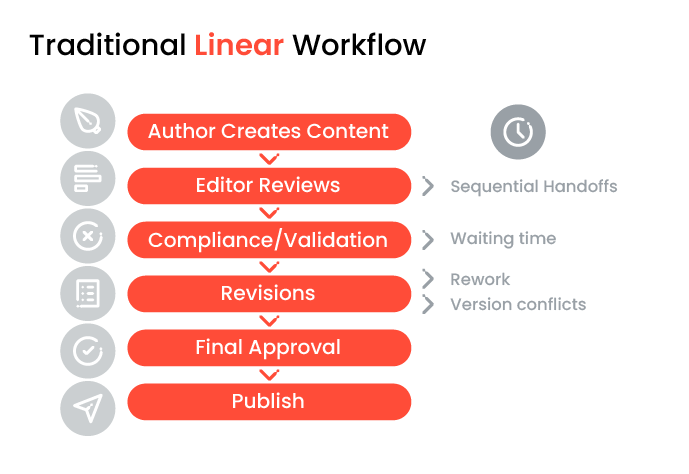
Traditional content production is linear: plan, write, review, approve, publish. Each hand-off adds delay, and each tool adds friction.
AI-enabled systems replace this with orchestrated collaboration. Specialised AI capabilities that focus on planning, drafting, validating or formatting work in parallel with human experts inside a single, secure workspace. This means first drafts can be produced in hours not days, with streamlined reviews and consistent standards embedded from the start.
For publishers, this could include checking for plagiarism, language quality, structure and completeness before editorial review begins, helping teams reduce avoidable delays earlier. Later in the process, it can involve the creation of structured abstracts and lay summaries, helping research become easier to discover, understand and share.
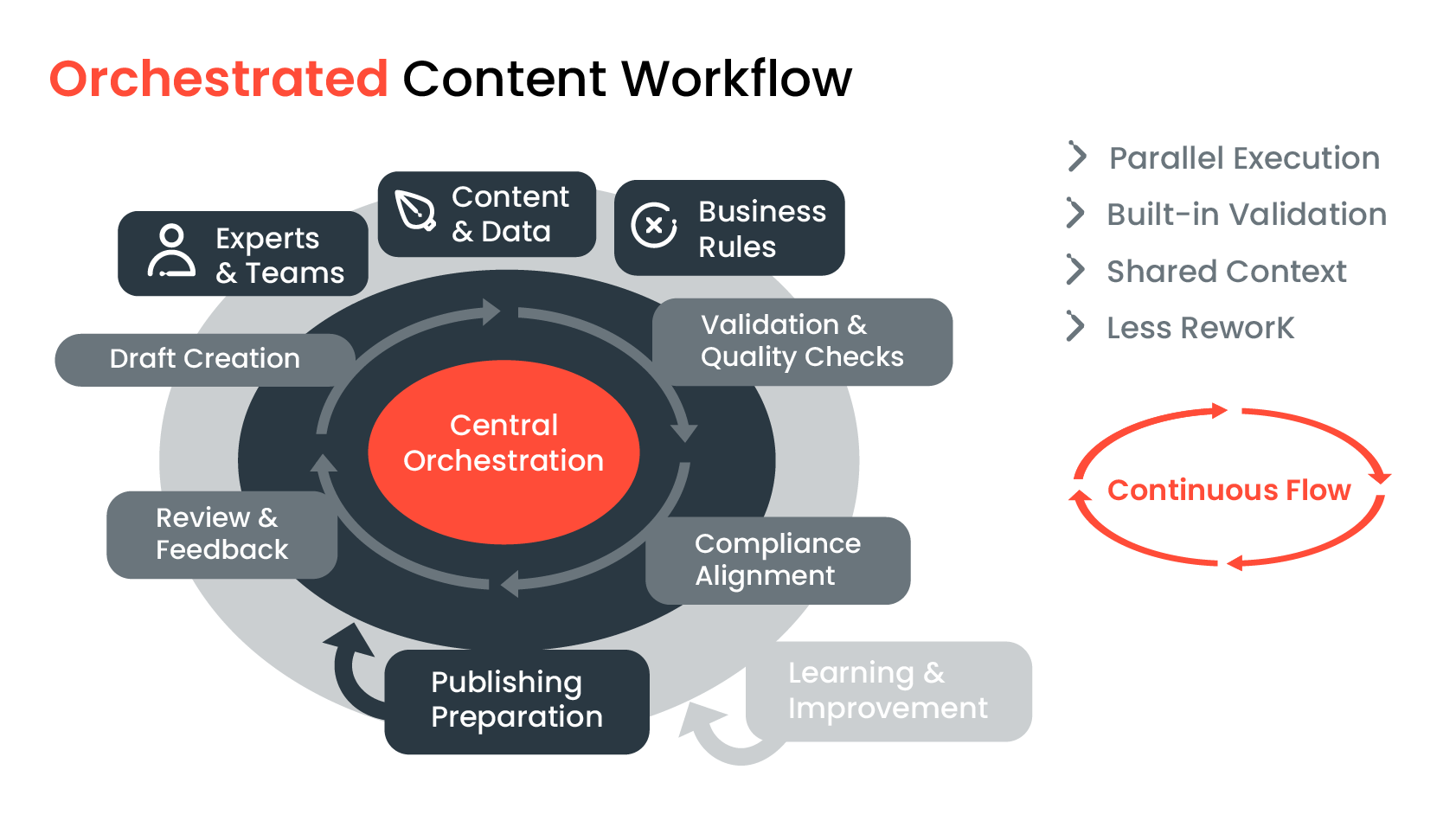
When built on enterprise-grade Microsoft Azure cloud, these environments provide the scalability and governance executives expect while integrating easily with existing learning-management, publishing and compliance systems.
This also creates a stronger foundation for continuously updated reference content, where new information can be reviewed, validated and incorporated more quickly without relying on slow, sequential update cycles.
Accelerating performance through intelligent architecture
For leaders, the impact of intelligent automation goes far beyond efficiency metrics.
We’ve developed an Azure-based approach that combines enterprise engineering with real business agility. At its core is a modular AI architecture that orchestrates specialised capabilities, such as drafting, submission readiness assessment, compliance validation and quality assurance, in parallel rather than in sequence. Each component operates within a governed Azure environment that uses secure APIs, dynamic configuration and observability tools to ensure transparency and control.
For publishers, this can support earlier decision-making by surfacing formatting gaps, missing submission elements or policy issues before they slow editorial workflows further downstream.
This unified approach delivers speed with governance, helping organisations release new courses, publications or compliance materials up to 70% faster, while preserving the quality, consistency and traceability that satisfy editorial, board-level and regulatory expectations.